







Feeling stuck putting everyone else first? Discover the 3 challenges holding women back after 40 – and how to finally move past them.
Your email is 100% confidential. Unsubscribe anytime.


Many women reach a point in their parenting journey where they realize something feels off. They’re doing everything “right,” yet feel overwhelmed, unappreciated, or stuck in patterns that don’t feel healthy.
One possibility worth exploring? Codependent motherhood.
This article is not here to label you. It’s here to offer insight. We’ll unpack what codependent behaviors in mothers can look like, where those patterns begin, how they affect your children and family system and what healing can look like when you’re ready to reclaim your peace.
If you’re feeling lost in your role as a mother, this is your invitation to start making sense of the confusion and to discover a different way forward.
Let’s start with something that might feel a little uncomfortable:
Being a codependent mother doesn’t mean you’re weak. It means you’ve been taught that love means self-sacrifice.
Codependent mothers often tie their self-worth to their child’s well-being. Their identity centers on caretaking, and they feel responsible for managing their child’s emotions, choices, and outcomes, sometimes well into adulthood.
But this isn’t the same as healthy attachment. While nurturing fosters independence, codependent caretaking blurs boundaries and leaves both mother and child emotionally entangled.
Some hallmark codependency behaviors in mothers include:
You might also notice patterns of control, resentment, or manipulation tactics — not out of malice, but as survival strategies developed over time. These are common codependency symptoms, especially in mothers who were taught that their value comes from self-sacrifice.
These patterns aren’t your fault. But once we can name them, we can begin to heal them.
No one wakes up and chooses to be codependent. These patterns are usually seeded early, deep in your own childhood experiences.
Maybe you were raised in a home where love was conditional. Maybe your emotions were dismissed, or you had to grow up fast. Parentification — where a child takes on adult responsibilities — often plays a role. You may have learned that care is something you earn, not something you receive by default.
And so you carried that script into your own parenting style. You gave, and gave, and gave because that’s what good mothers do. Or so you were told.
Many women in my coaching programs discover that their codependency tendencies were passed down generationally. Their mothers and grandmothers also lived in the grip of family codependency, shaped by cultural expectations, religious narratives, and societal norms that glorify martyrdom and silence female needs.
Cultural and societal factors also matter. Certain communities emphasize obedience, sacrifice, and caretaking without question. Mothers in these environments are often judged harshly for setting boundaries or prioritizing their own healing.
Layer in trauma, chronic stress, or unresolved childhood trauma, and it becomes even harder to distinguish between love and over-functioning.
But here’s the truth:
You are not broken. You’re just living out patterns that made sense in a different time, a different context.
And now, you get to choose something new because overcoming codependency starts with seeing it clearly.

Codependency doesn’t show up the same way in every mother. Some over-give. Others control out of fear. Some rely on their child for emotional validation.
Here are three common patterns. You may recognize yourself in one — or all — of these types. That doesn’t mean you’ve failed. It means you’re ready to see the pattern clearly and begin changing it.
This mother believes love means never needing anything. She’s the first to help, the last to rest, and often praised for her devotion. But beneath the surface, this constant self-denial can lead to deep exhaustion and unspoken resentment.
Her caretaking role becomes her whole identity. If she’s not needed, who is she?
Signs of this pattern:
Many of our students come to realize that their giving has become compulsive. They feel guilty for even wanting to set boundaries, let alone enforcing them.
But boundaries don’t make you selfish. They make you whole.
This type doesn’t feel controlling. She feels responsible. She believes she’s helping. But her anxiety shows up as helicopter parenting, micromanagement, and an inability to trust her child’s decisions, no matter their age.
Her control isn’t about power. It’s about fear. Fear of failure, fear of abandonment, fear that letting go means something bad will happen.
Behaviors that often show up:
Underneath this is often a deep unmet need for safety. Somewhere along the way, she learned that closeness means constant oversight. But this form of parent codependency can limit a child’s development and autonomy while keeping the mother stuck in chronic stress and anxiety.
Letting go isn’t abandonment. It’s an act of trust.
For this mother, the child becomes the emotional center of her world. Her moods rise and fall based on how connected she feels to them. This often involves parentification, where the child feels responsible for the mother’s emotional state.
It may sound like:
“You’re the only one who understands me.”
“I don’t know what I’d do without you.”
“After everything I’ve done, this is how you treat me?”
This is relationship codependency in action. The mother leans on the child not just for companionship, but for validation, meaning, and identity. When the child pulls away — as healthy children must — the mother may spiral into despair or panic.
Common signs include:
We teach a core concept called U.P.R. (Unconditional Positive Regard). One of its most powerful lessons is this:
You can love someone deeply without making them responsible for your emotional stability.
That’s the shift from codependency to connection.
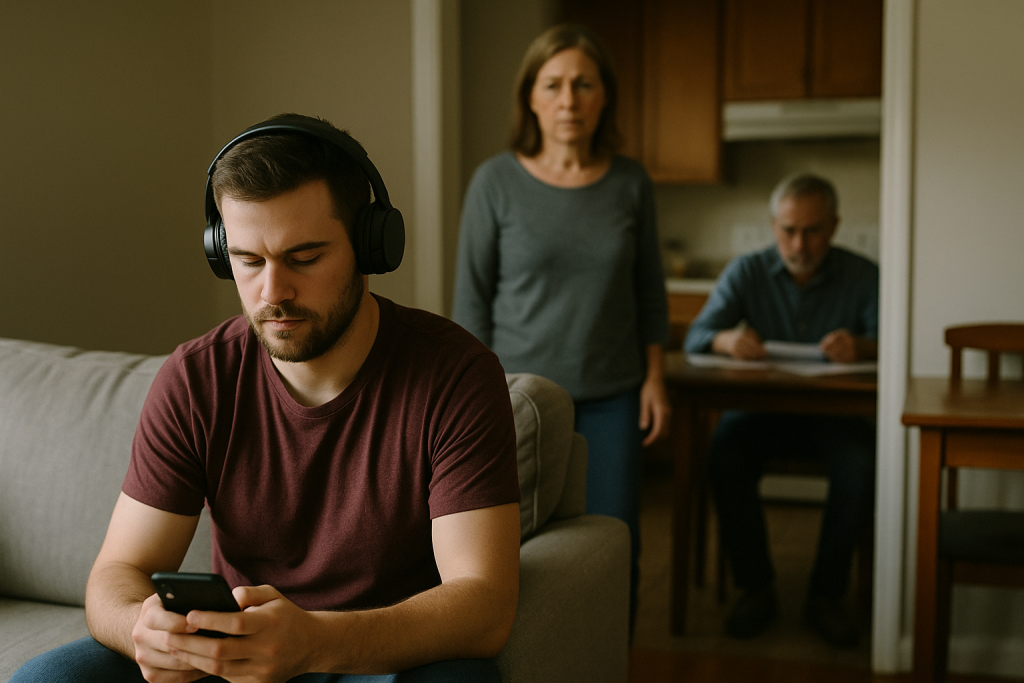
The effects of codependent motherhood ripple far beyond the mother-child relationship. These patterns shape how children see themselves, how families function, and how everyone inside the system communicates, connects, and copes.
Unaddressed, these dynamics can quietly pass from one generation to the next, repeating the same emotional script, over and over.
Children of codependent mothers often grow up emotionally confused. On the surface, they may appear well-cared-for. But underneath, they’re wrestling with attachment issues, blurred boundaries, and a distorted sense of self-worth.
Common developmental effects include:
What starts as emotional over-involvement becomes a script the child unconsciously lives out in every future relationship.
We help women recognize that even if their intentions were loving, dysfunction can still grow from unbalanced care. Awareness is the first step to rewriting the script for yourself and your child.
Codependent motherhood doesn’t just affect the mother and child. It shifts the entire family dynamic.
You might see:
When mothers learn how to speak their truth without shame and how to listen without collapsing into guilt or reactivity. When communication heals, so does the system.
The wounds from growing up in a codependent household don’t disappear with age. Adult children of codependent mothers often carry invisible burdens that shape their relationships, mental health, and sense of agency.
Common long-term effects include:
One of the most powerful tools for adult children is the grey rock method, a strategy for dealing with emotionally draining dynamics while protecting your peace. It’s not cruel. It’s clarity. And in many cases, it’s a necessary step toward healing.
But healing isn’t just for adult children. It’s for mothers, too. When you recognize these dynamics, you can begin to choose differently.
You can interrupt the pattern for yourself and for the generations that follow.
If you’re seeing yourself in these patterns, take a breath. Awareness is liberation.
You don’t need to be perfect. You just need to be willing. Healing from codependent motherhood isn’t about blame. It’s about choosing a new way forward. One rooted in clarity, boundaries, and mutual respect — not guilt, control, or self-erasure.
For some mothers, especially those navigating unprocessed childhood trauma, support from a licensed professional can be a crucial part of healing. But not all therapy is the same. The most effective approaches for codependency often include:
Breaking free from codependent patterns starts with one radical shift: redefining what it means to love.
Real love doesn’t mean rescuing, fixing, or endlessly giving. It means loving another way through clear boundaries, honest communication, and the courage to let others experience the consequences of their choices.
Here’s what that looks like in practice:
We often say, “You are not abandoning them. You are choosing not to abandon yourself.”
And that, right there, is how the cycle begins to break.
Eventually, this journey becomes less about what happened in the past and more about who you want to be moving forward.
Growth looks like:
One of the hardest parts of this work is managing the guilt that surfaces as you shift your role. But as we teach in programs:
Guilt is not a signal that you’re doing something wrong. It’s a signal that you’re doing something new.
New patterns may feel foreign. But that’s how you know they’re working.
Because healing isn’t just about stopping the pain. It’s about choosing a different kind of love that includes you, too.

If you’ve seen pieces of yourself in this article, take a moment and breathe. You’re not alone, and you’re not broken. You’ve simply been living out a set of beliefs that were handed to you, often wrapped in love, fear, and obligation.
But now, you have something else, awareness. And with it, the power to choose.
You get to define love in a way that includes you.
You get to unlearn urgency, silence, and shame.
You get to set boundaries that honor your values.
You get to build relationships rooted in truth.
And while the path isn’t always easy, it is possible. One choice, one moment, one conversation at a time.
So let’s begin simply. Not with a grand declaration but with a whisper to yourself.
What’s one small thing you want, just for you?
Maybe it’s a bath without interruption.
Maybe it’s ten minutes to read.
Maybe it’s saying, “I’ll get back to you,” and giving yourself time to think.
Start there.
Download the Self-Priority Worksheet to name something you want to do for yourself. Something that is within your control and actually attainable.
Because healing doesn’t start with fixing everything.
It starts by choosing one thing that serves you.


Feeling stuck putting everyone else first? Discover the 3 challenges holding women back after 40 – and how to finally move past them.
Your email is 100% confidential. Unsubscribe anytime.